
The immediate concern for the rupee is the sharp spike in oil prices

While far from being a currency war, India does not have much of an option but to depreciate to accommodate its exports at a time when China shows its intent to let its currency depreciate.

Bankers have decided to fight back against 'arbitrary arrests' and 'harassment' by probe agencies.

While selling started in April, it has intensified this month, with FPIs pulling out $1.1 billion and $2.5 billion from equities and debt market, respectively

A well-run non-banking company has better margins than a bank, but the objective of setting up Ujjivan was to provide comprehensive financial inclusion, Ujjivan Small Finance Bank MD & CEO Samit Ghosh tells Anup Roy in an interview.

Bankers seem to be pleased with the government for keeping its promise of not interfering in operational matters, but are apprehensive about the intense scrutiny of their functioning.

With Karnataka election results out of the way and as several key states, including Madhya Pradesh and Rajasthan, prepare for assembly polls later this year ahead of the 2019 general election, Shankar Sharma, vice-chairman and joint managing director, First Global, advises investors to ignore all the noise around the elections.

The RBI now brings in important and contentious changes directly through voluminous Master Directions, or Master Circulars

Central bank moves to infuse liquidity into bond market to help boost sentiment.

As yields rise, bond prices fall. Higher yields not only translate into losses for investors, it also pushes up borrowing cost for companies as well as government

A weak rupee, though seemingly good for exporters, would push up input cost further for Indian companies.

'Macro headwinds are rising for Indian equities in the form of rising commodity prices, especially oil, depreciating rupee, fiscal challenges, election-related uncertainty and upside risks to inflation'
Year-to-date, the rupee is the worst-performing currency in Asia, weakening 4.184 per cent against the US dollar.

The RBI had in the past expressed its concerns about allowing foreign investors in short-term paper, because it attracted hot money.

HDFC Bank, Reliance Industries and Housing Development Finance Corporation (HDFC) -- with free-float market cap of over Rs 3 trillion -- have the highest weight in the Sensex and the Nifty.

The stocks could tank more than what it did after the United Progressive Alliance-1 came to power in 2004, as the market has not yet priced in a Bharatiya Janata Party defeat, says Raj Bhatt.
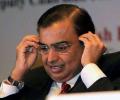
If Reliance has to pay about one percentage point more for short-term money, the bond market could be out of bounds for many lower-rated firms after some time.

IT major nears $100 bn m-cap, accounts for 61% of the group's combined valuation.

As yields on 10-year government bonds rose from 6.65% in April 2017 to around 7.50% now, liquidity pressures have increased the cost of funds for housing finance companies.

RBI deputy governor N S Vishwanathan has said the new framework was in line with the Insolvency and Bankruptcy Code guidelines.
 © 2026 Rediff.com - Investor Information - Advertise with us - Disclaimer - Privacy Policy - Sitemap - Feedback - About us - Terms of use - Grievances